The Carrying-Cost Gap Hidden Inside Boca Raton's Luxury Median
July 16, 2026
July 16, 2026
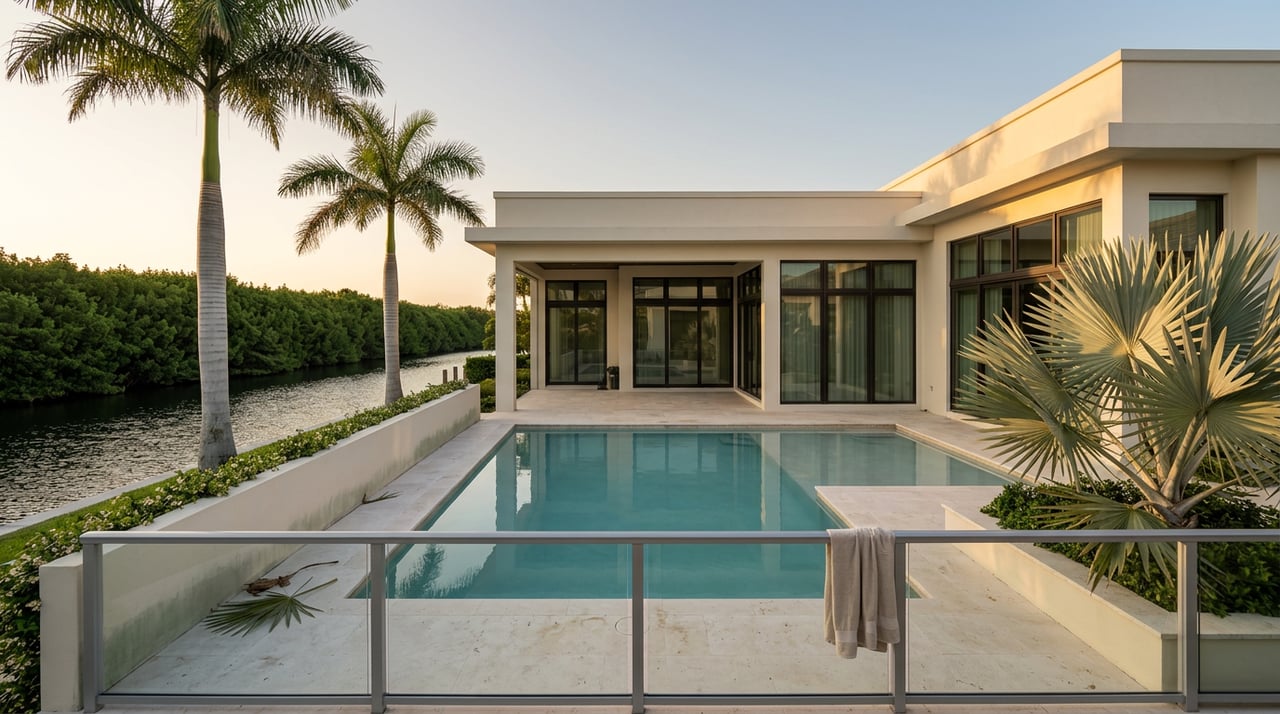
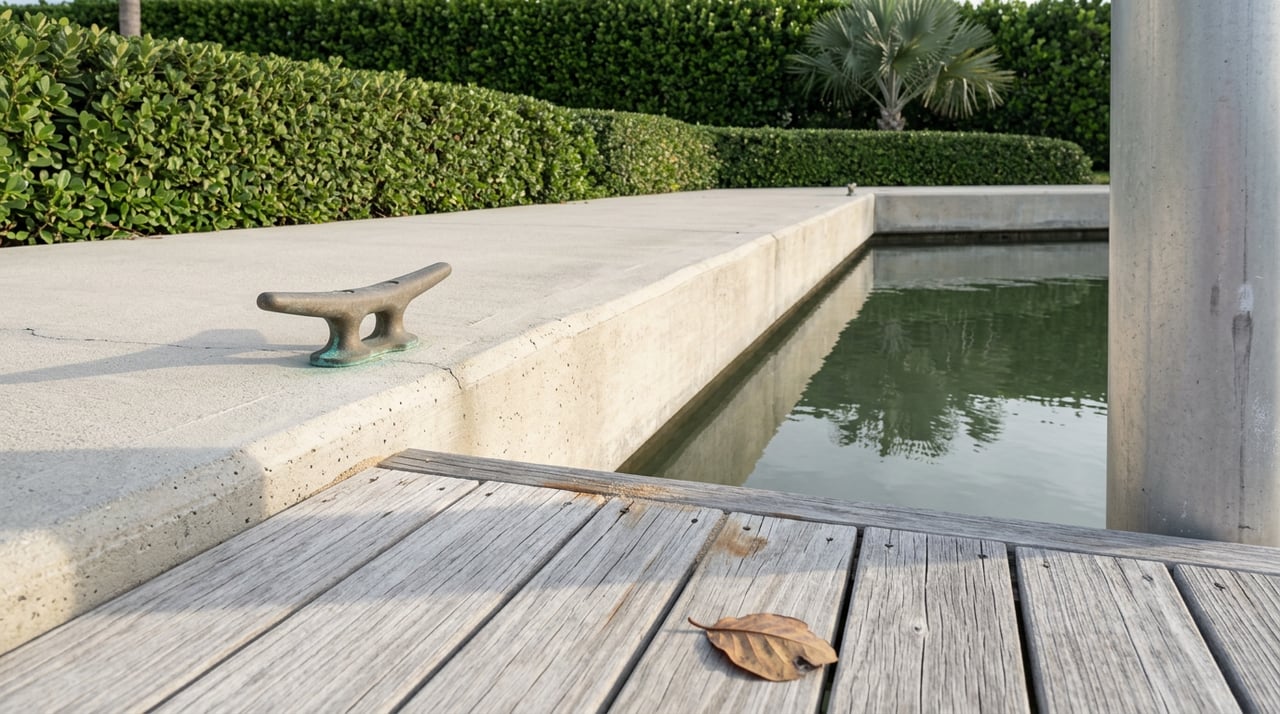
Two buyers stand in front of two Boca Raton homes on the same afternoon. One is a 1990s waterfront estate east of Federal Highway with a deep-water dock and a listing price of $6.2 million. The other is a newer build inside Boca Bridges, listed at $4.4 million, no water. On paper the coastal home is the trophy and the inland home is the value. Once you run the annual carrying math, the ordering can flip, and the reason has almost nothing to do with the mortgage.
That inversion is the story the median price cannot tell you.
The luxury single-family median in Boca Raton rose to $2,192,500 from $2,000,000 the year prior, with homes closing at 94.2% of list price and days on market tightening to 33 days. Price per square foot climbed to $648, up from $546 a year earlier, with buyers paying more for quality, design, and the right address. The June 2026 median list price of houses in Boca Raton was $1,540,000, compared to $900,000 in June 2025.
The obvious read is that Boca is appreciating on quality. That is partially true. The less obvious read is that the $/sf figure is doing double duty. It reflects finishes and floor plan, yes. It also reflects something buyers rarely price out loud: insurability. Newer stock in West Boca gated communities carries a structural advantage that gets capitalized into every square foot.
To see it, start with the deductible.
Florida homeowners policies do not use a flat hurricane deductible. Almost every Florida homeowners policy includes a separate hurricane deductible, and Florida law allows insurers to apply a hurricane deductible that is typically 2% to 5% of your home's insured value. On a home insured for $450,000, a 2% hurricane deductible means you cover the first $9,000 in damage before the policy pays anything. At 5%, that number rises to $22,500.
Now scale that mechanism up to the tier where Wilson clients actually transact. In Palm Beach County, hurricane deductibles are typically calculated as a percentage of the insured value of the home, often between 2% and 5%, rather than a flat dollar amount. On a $600,000 home, that means a deductible of $12,000 to $30,000 before your insurer pays a cent. On a $6 million insured dwelling value, the same 2% to 5% band means the first $120,000 to $300,000 of hurricane damage sits with the owner. The deductible is not a fee. It is a self-insured layer that grows dollar-for-dollar with the value of the home.
That is the first hidden mechanism. A luxury Boca buyer who reads the deductible line as "just a percentage" is quietly agreeing to carry a six-figure retention on every named storm.
The second mechanism is the credit system that sits on top of the deductible. Florida law requires insurers to offer premium credits based on specific construction features that reduce wind damage risk. An inspector evaluates roof shape, where hip roofs sloped on all four sides perform significantly better in high winds than gable roofs and earn the largest credits. Roof-to-wall connections, with single wraps, double wraps, and clips each earning different credit levels. Roof deck attachment. Roof covering, where newer roofs installed to Florida building code earn better ratings. Opening protection, where impact-resistant windows and doors, or accordion shutters meeting Florida product approval standards, can earn substantial credits.
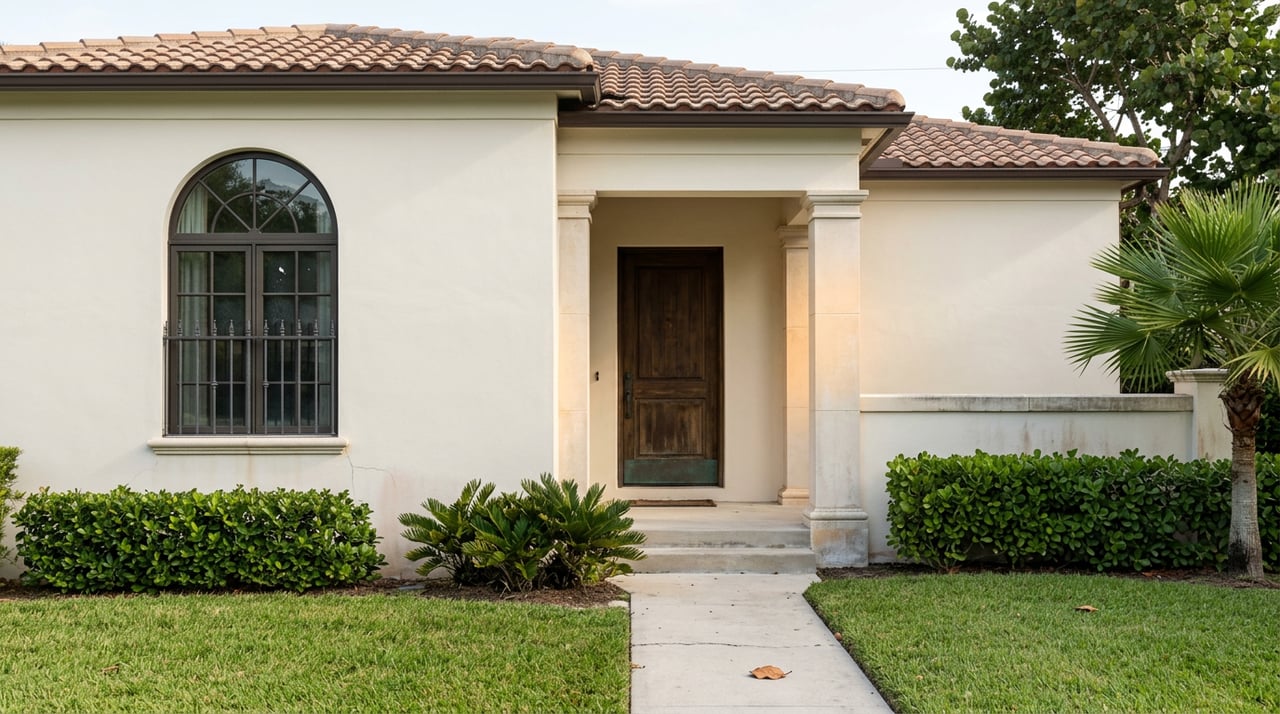
The credit weights matter more than the list. If your home was built after 2002, when Florida adopted its post-Andrew building code, you likely qualify for some credits even without any upgrades. That date is not incidental. It cleaves the Boca market into two eras. A home in Boca Bridges or Lotus or Alina Residences was built to that code as a baseline. A 1990s Sanctuary or Royal Palm Yacht & Country Club estate was not, and reaching parity requires retrofit work.
The dollar spread is meaningful. In Palm Beach County, annual premium reductions of $500 to $2,500 per year are common for homes that complete a full opening protection upgrade, and homes closer to the coast, including many communities east of Congress Avenue running toward Federal Highway and the Intracoastal, tend to see the largest premium reductions because their base rates are already high. On older, higher-value coastal homes without opening protection, the missing credit compounds against an already elevated base rate.
Consider two composites drawn from the market Boca buyers are actually shopping in 2026.
| Factor | East Boca coastal estate, ~1996 build | West Boca gated build, ~2020 build |
|---|---|---|
| Rebuild-cost insured value | ~$5.5M | ~$3.8M |
| Post-2002 code baseline | No | Yes |
| Roof shape typical | Mixed, often gable elements | Hip, engineered to current code |
| Opening protection | Retrofit required for full credit | Impact glass throughout at delivery |
| Hurricane deductible at 2% | $110,000 self-retained | $76,000 self-retained |
| Hurricane deductible at 5% | $275,000 self-retained | $190,000 self-retained |
| Wind mitigation posture | Credits available only after retrofit | Full credit tier at closing |
The trophy home is still the trophy home. The point is not to talk anyone out of a waterfront estate. The point is that the annual carrying delta between these two properties is materially larger than the price tag suggests, and it lives inside a policy document most buyers never read before they write an offer.
A percentage deductible does not treat a $6 million home the same way it treats a $600,000 home. It scales the retained risk with the address.
The carrying-cost gap is theoretical until closing week. Then it becomes procedural.
Sellers of older coastal homes are increasingly asked for a current wind mitigation report before the appraisal comes back. A wind mitigation inspection typically costs $75 to $150, and the resulting credits can easily save you several hundred dollars per year on your premium. The report is valid for five years. A stale or missing report can hold up binding.
Buyers relocating from the Northeast often assume windstorm and flood ride on the same policy. They do not. Flood coverage runs through NFIP and private markets, since standard Boca Raton home insurance excludes flood damage. That gap matters at the intracoastal edge. It matters at closing when the lender wants proof of both.
Claim mechanics also cut differently at the luxury tier. If a loss involves both wind and flood, insurers may argue that excluded flood damage caused most of the loss, thereby denying or limiting the covered wind claim. The concurrent causation argument is a common one in Palm Beach County after a named storm, and it lands harder on older waterfront stock where the two perils arrive together.
Timing is the last piece. Under Florida law, per Florida Statutes § 627.70131, insurers have up to 90 days to settle a claim, though many are resolved sooner. Ninety days is a long time to carry a six-figure deductible while a repair estimate is negotiated.
A listing that mentions a 2019 roof, impact glass throughout, and a hip configuration is doing more than describing finishes. It is telling you the annual cost of ownership will read differently than the neighbor's identical floor plan with a 2007 roof and accordion shutters. Two homes on the same street can sit two credit tiers apart.
For state-level context on qualifying features and credits, the My Safe Florida Home Program publishes what inspectors look for and which upgrades qualify for matching grant support. The program is generally aimed at owners of single-family homes insured and valued at $700,000 or less, which puts most Wilson-tier clients outside the grant, but the inspection framework it uses is the same one that governs credits at the top of the market.
The takeaway for the buyer comparing East and West Boca in 2026: the median tells you what people paid. It does not tell you what they are paying every year to keep the roof over their head. Two homes at the same price can carry an insurance spread of five figures a year, and the spread widens with insured value.
Does the hurricane deductible reset each storm, or is it annual? The hurricane deductible is triggered by an official declaration from the National Weather Service naming the storm as a hurricane. Policy language varies on whether the retention resets per event or per season, which is a line worth reading before you sign.
How much can wind mitigation upgrades change the math on an older home? Wind mitigation is one of the most effective ways to lower home insurance premiums in Boca Raton. Features like hurricane straps, hip roofs, and impact-resistant windows can make a significant difference, and adding these features can reduce premiums for older homes by up to 40%.
Are these dynamics different for a luxury condo purchase? Yes. Condo buyers carry an HO-6 for the interior while the association handles the building envelope. Condos offer slightly more buyer leverage, driven by longer market time and the heightened importance of building financial health. Reserves and the master policy deductible become the equivalent lens.
The Boca Raton luxury market is not a story about a rising median. It is a story about which square feet are cheaper to keep. Buyers who understand that carrying-cost gap ask sharper questions, write sharper offers, and end up owning the right property for the right reasons.
If you are weighing an East Boca waterfront estate against a newer gated West Boca residence and want the math on both before you tour, John Wilson and Lisa Wilson would be glad to walk you through it. Schedule a private consultation.
Stay up to date on the latest real estate trends.
Experience a bespoke real estate partnership where every detail is considered and every goal prioritized. Working with us means more than a transaction. It’s an elevated journey defined by discretion, expertise, and results tailored to you